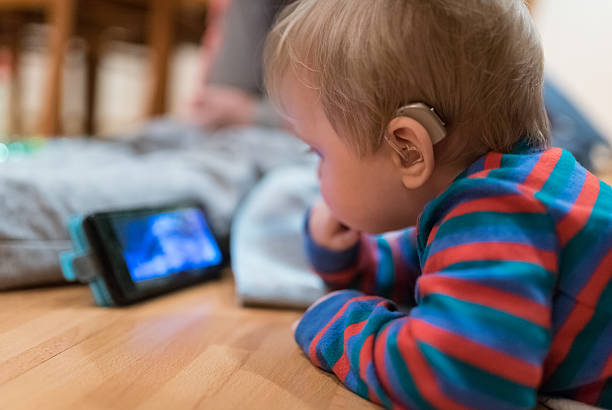
What does a life with hearing loss look like?
Life with hearing loss can vary greatly depending on how early it’s noticed, the degree of impairment, and on the amount of resources available. With proper support, day-to-day life can be nearly indistinguishable from that of a person with normal hearing, save for time spent in the water (as hearing aids are not water-proof). However, for a person with moderate hearing loss without hearing aids, life can become very difficult and restrained, which is what makes early action and financial support for hearing care so important.
For myself, having worn hearing aids for as long as I can remember, having hearing loss is simply a fact of life which adds minimal stress to my days. I try to have batteries or filters nearby at all times for my hearing aids in case they die or need a filter change, and don’t need to buy headphones since they connect to my phone via Bluetooth. When I was younger, all my teachers would wear a school-funded microphone called an FM which sent their voice directly to my ears, but I’ve grown away from that as I’ve gotten older. Naturally, I got pretty good at lip reading from all the mornings I forgot to(or didn’t care to, for whatever reason) wear my hearing aids, but once again, as I’ve gotten older I almost exclusively wear them throughout my day. Furthermore, in my own lifetime I have witnessed the development in hearing aid technology, as they become smaller, more efficient, more water-resistant, and generally more advanced. Overall, both socially and academically, my hearing loss has had nearly zero effect on me, which I credit entirely to my hearing aids and the supplemental support I’ve received along the way.
Proper steps to take if you suspect hearing loss
If you suspect hearing loss in your child, it is imperative that you take them to have their hearing tested within the first few years of their life, even if they passed hearing tests in the hospital when they were born. Current tests on newborns can, on occasion, produce false negatives, as was the case with myself, and new hearing loss can develop at any stage of life.
My hearing loss was not discovered until I was two years old, and although I am extremely lucky to have a mother who happened to be a speech therapist, I was still left with a minor speech impediment until the age of 16.
What to do if diagnosed with hearing loss
If your child has been diagnosed with hearing loss, it is important that accommodations are made as soon as possible. If finances are an issue for you, check here to see if your state’s medicaid covers the cost of hearing aids and audiology appointments, as it varies depending on your location. If not, you may be in luck, as there are multiple organizations, foundations, and charities which work to support low income Americans who cannot afford the cost of hearing aids and have no other option. A list of such resources can be found under the Financial Aid tab above.
Long term, you’re in luck, as thanks to the Americans with Disabilities act, all public schools are required to offer accommodations to hearing impairments(as well as other disabilities). For students with hearing aids, this means they will supply batteries for hearing aids, which would be rather expensive otherwise.
 Hearing Loss Support